

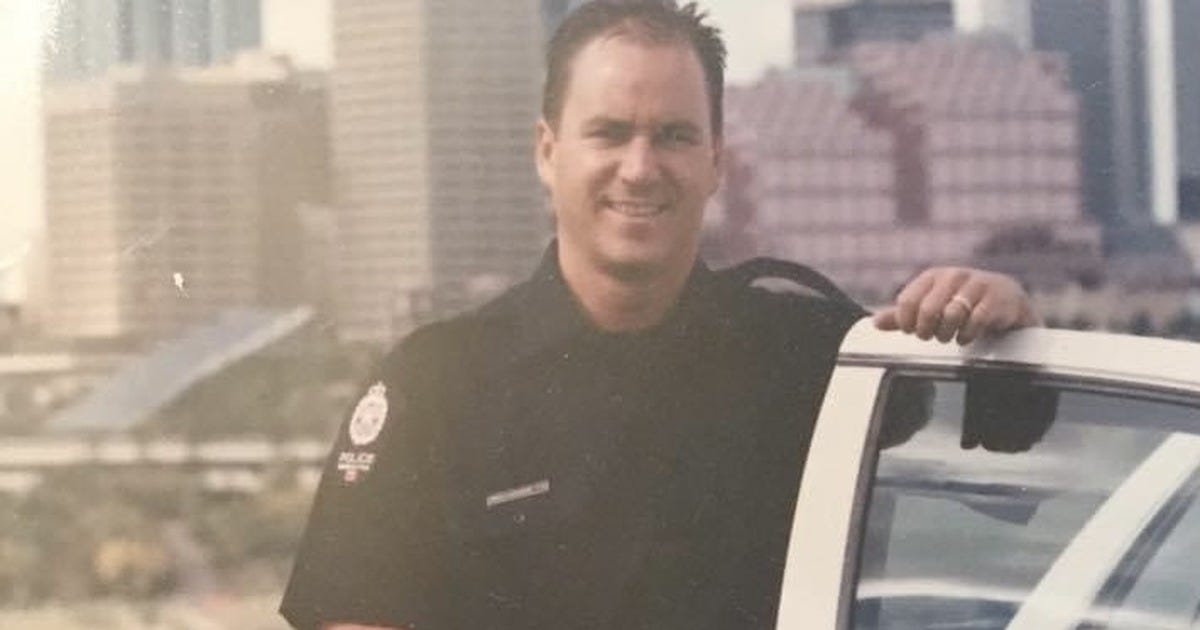
It was a hot summer dayshift. Second watch, almost noon. And I was thinking about Chinese food.
My partner and I had been split into separate one-man cars — the usual departmental move to make day shift look extra impressive to the public. We had plans for lunch. My stomach was already growling.
I’m telling you that not because it matters to the story. I’m telling you because the mundane details of a normal day, right before it stops being normal, are the part most people leave out.
The call came in sounding routine. A neighbor complaining about a loud noise next door. The kind of call that sounds like nothing and usually is nothing.
It wasn’t nothing.
By the time the first unit arrived, the noise had been identified as gunshots. My squad mate was on foot, chasing a shirtless guy armed with a shotgun down an alley. The suspect opened fire on him and forced him back. I heard the radio chatter, parked my hunger, and headed to back them up.
I got there in time to watch the suspect dart from the alley, aim his weapon at my windshield, think twice, and keep running at a full sprint. I gave chase on foot, after losing what felt like an embarrassing eternity tangled in my own seatbelt. I finally cleared the car, left it running with the door wide open in the middle of the street, and took off after him.
He cleared the next block and ran into a schoolyard. I could see children playing beyond him. Lots of children. I didn’t know it yet, but it was track and field day. The entire school was outside. That single image changed everything about what I was and was not willing to do in the next sixty seconds.
The radio chatter was unbearable, and it was giving away my position, so I turned it off. I was on my own now.
He turned and opened fire, wild, desperate, not aimed. I wasn’t going to make the same mistake. I made a decision in that moment I’ve replayed a hundred times since: I was not going to return fire from that distance with children behind him. I needed to close the distance first.
I linked up with a K9 handler and his dog, Caesar, six years old, wouldn’t see seven. Together we closed the distance while the suspect’s back was turned. Caesar was released. For one second, I thought it was finished.
Then the suspect spun and fired. Caesar went down.
This is the first time I’ve ever told that part of the story publicly. What it did to me is nothing compared to what his partner carries.
I returned fire. Between my partner and me, we later learned we’d placed nine rounds on target. The suspect went down, twenty years old, struggling with mental illness.
I was taken downtown for questioning and read my rights by a homicide detective, who took custody of my weapon.
I never did get the Chinese food.
What happened in that schoolyard was over in a matter of minutes. What followed, the years of learning that grew out of that moment, and the many others like it, became the real education.
I didn’t have language for it then. I’ve spent thirty-five years naming it since.
The decision to close the distance instead of firing from range, with no policy or protocol to hide behind if it went wrong. That was Ownership. It was on me, and I knew it going in.
Every principle I teach now was already alive in that schoolyard, decades before I had names for any of them. Physical conditioning gave me the capacity to close the distance and keep my hands steady. Resilience was already working before the scene even cleared, boxing the images, staying operational. The integrity behind what I’d later call Guidance was the commitment to tell Internal Affairs exactly what happened, without spin. And Execution was picking the single highest priority out of a converging scene, a dead K9, an armed suspect, a schoolyard full of kids the same age as my own and acting on it.
None of it showed up by accident. It was built, through years of training and hard experience, into the kind of man who holds up when holding up is the only acceptable option.
Years later, running Special Investigations for a national firm, I watched my own teams drown in the same mechanics of stress I’d seen on the street — exhausted, deciding from emotion instead of clarity, without ever facing anything that would register as a real threat on patrol.
The principles that got me through that schoolyard are the same ones that get a good leader through a bad quarter. The pressure is different. The mechanism isn’t.
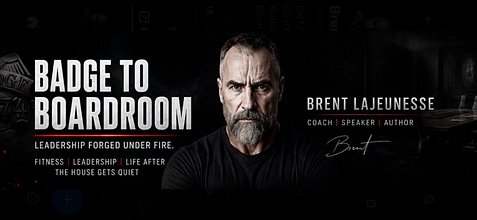
That’s what the rest of Badge to Boardroom is about. Five principles, one schoolyard, and everything I’ve learned since about what actually transfers from the hardest moments of a career into how you lead the rest of your life.
For more you can read my recently released book, Badge to Boardroom, Leadership principals forged under fire.
https://www.amazon.com/dp/B0CW1GLSR8
Thank you for your service and for the story.
Incredible. Dangerous. Thank you.